Your Car A/C is Blowing Hot Air: What You Can Do About It Before Summer Arrives
Your Car A/C is Blowing Hot Air: What You Can Do About It Before Summer Arrives
It is a hot summer afternoon, and you get in your car hoping that there will be a blast of cool and refreshing air. But your air conditioning system in the car fires up hot air rather than cool, and that is not only exasperating, but burdensome and perspiring, as well.
Sound familiar? This is a situation which is not only prevalent, but it is also amongst the most complaints made on auto repair shops during the approach of summer. But why does A/C in your car stop functioning well all of a sudden? And more to the point, how on earth can you repair it before you find yourself trapped inside a traveling steam room?
This is a complete guide to diagnosing and fixing the problem where your car A/C blows hot air including all the possible causes, common causes, ways of diagnosing the problem, and how to fix it either as a DIY or professionally. You do not have to wait until summer comes and sweats you out; now it is time to take care of the matter and enjoy the climate.
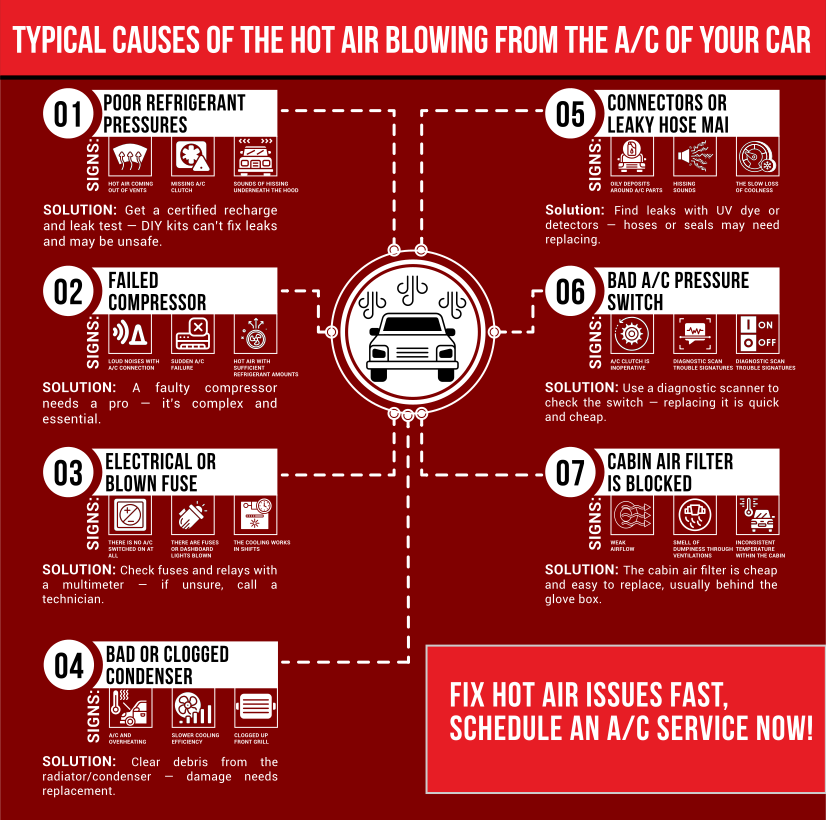
Typical Causes of the Hot Air Blowing from the A/C of your Car
The air conditioning of your car can be failing due to several reasons. And this is the usual suspects:
1. Poor Refrigerant Pressures
The life blood of your A/C system is refrigerant. It is the chemical which soaks heat and helps chill the air to be blown to your car. In case your system has little refrigerant (because of a leak or oldness), your A/C machine just cannot cool down the air properly.
Signs:
- Hot air coming out of vents
- Missing A/C clutch
- Sounds of hissing underneath the hood
Solution:
The system can undergo a recharge and leakage test by a certified mechanic. There is an option to purchase a DIY recharge kit which is ineffective at repairing a leak and can be dangerous when improperly applied.
2. Failed Compressor
It is the compressor that releases the pressure on the refrigerant and moves it around the system. When it breaks down, your A/C will never be able to cool the air.
Signs:
- Loud noises with A/C connection
- Sudden A/C failure
- Hot air with sufficient refrigerant amounts
Solution:
A faulty compressor requires the service of a professional. It is an essential and complicated part of the system.
3. Electrical or Blown Fuse
Contemporary auto A/C units are connected using switches, relays, and sensors. When one of these electrical components fails, your A/C system may stop working or default to hot air to ensure that it is not dangerous.
Signs:
- There is no A/C switched on at all
- There are fuses or dashboard lights blown
- The cooling works in shifts
Solution:
Inspect the fuses and the relays. Find out about the concept of using a multimeter to test circuits should you be okay with auto wiring. Otherwise contact a technician.
4. Bad or Clogged Condenser
The refrigerant is brought out of the condenser to fill air with heat in the outside environment. When it is clogged with debris, or dented in by impact, it cannot perform its tasks.
Signs:
- A/C and overheating
- Slower cooling efficiency
- Clogged up front grill
Solution:
See if there is any dirt, leaves or even bugs that are clogging up the front of the radiator/ condenser unit. Clean it gently. As far as physical damage is concerned, it can only be repaired by replacement.
5. Connectors or Leaky Hose Mai
Leaks due to cracks or worn seals in the A/C lines can cause the loss of the refrigerant in the system and pressure problems.
Signs:
- Oily deposits around A/C parts
- Hissing sounds
- The slow loss of coolness
Solution:
The source can be identified using UV dye tests or using electronic leak detectors. There are cases where hoses or seals need replacement.
6. Bad A/C Pressure Switch
This is a sensor which measures the refrigerant pressure. When it is read too high or to acceptably low, it will turn off the compressor to impose no harm.
Signs:
- A/C clutch is inoperative
- Diagnostic scan trouble signatures
- System switches on/off many times
Solution:
Check the switch with a diagnostic scanner. It is relatively inexpensive to replace and can be replaced in a short matter of time.
7. Cabin Air Filter is Blocked
Your cabin air filter serves to purify the air that gets inside your vehicle. When it becomes jammed, it becomes more difficult to circulate air, and your cooling capability decreases.
Signs:
- Weak airflow
- Smell of dumpiness through ventilations
- Inconsistent temperature within the cabin
Solution:
The cabin air filter is cheap and simple to replace. The majority of these are inaccessible behind the glove box.
Read More About Is Your Muffler Talking to You? 6 Sounds You Should Never Ignore
The Diagnostic Approach: Step By Step
You might not need specialist tools and equipment or a visit to the car repair facility to diagnose the reasons that your cars air conditioner may be blowing out hot air. Through simple observation and careful process, you may hone the problem yourself. Here’s how:
Step 1: The Basics to Start With
- MAX up the A/C: Turn the temperature to the coldest, the fan to the highest. Test any air movement and listen to strange sounds. Observe whether the air blows or not, whether it is cold at first and turns warm or whether it blows warm at once.
- Look at the dashboard lights: Newer vehicles may sport an A/C or climate control warning lights as well as maintenance lights. A flickering A/C button might represent pressure problem or failure.
Step 2: Check Airflow and Fan
- Weak airflow? This may indicate a blockage of the cabin air filter or malfunctioned blower motor.
- Not a breath of air? It may be a blown fuse, a broken fan motor, or electrical problem.
Step 3: Check the Air Temperature
- Warm or ambient air: Indicates a problem with a refrigerant or is incompatible with a disengaged compressor.
- Cold air that turns hot: The cause may be because the evaporator coils are freezing, low refrigerant level, and occasional compressor failure.
Step 4: Sound/Listening Practice
- Clicking: This could be a result of compressor clutch or the relay.
- Squealing: This frequently indicates a loose or worn-out serpentine belt.
- Hissing: This normally indicates the leak of the refrigerant or an issue on pressure.
Step 5: Look at the Engine Bay
Lift the hood and take a glance at the components of the A/C system (compressor, condenser, hoses):
- Some drippy fluid/ oily smear? May mean head loss of lubricant or refrigerant.
- Crushed, deformed or rusted condenser fins? May cause lesser cooling efficiency.
- Hoses that are separated or deteriorated seals? May lead to loss of pressure.
Step 6: Compressor Operation Check
When the engine is running and A/C is set to maximum, see whether the compressor clutch is functioning (you will observe the centre part of the pulley beginning to rotate).
In case it is not operating, the problem might be the refrigerant shortage, faulty pressure switch, or electrical malfunction.
Step 7: Optional: Make use of a Manifold Gauge Set or A/C Pressure Gauge
Provided that you have a pressure gauge, connect it to the low-pressure port of your car A/C system
- Low pressure (less than 25 psi): Shows that there is a lack of refrigerant.
- Above 45 psi or unbalanced readings: It may show blockage, expansion valve and overcharging.
Step 8: Diagnostic Trouble Code (DTC) Scan
Scan with an OBD-II Scanner and look at A/C related error codes. Most of the newer cars have systems that recognize problems with the compressors, sensors or abnormalities in the pressure and save it in the car.
The Mechanics of Repairing Your Car A/C Pre Summer
Once the underlying cause has been identified, then you can determine whether or not you would like to make the effort to repair at home or visit a specialist. The following is the breakdown of solutions depending on the degree and complexity of the problems.
Simple A/C Repairs You Can Do Yourself
Cabin Air Filter Replacement
- Why: Unclean filter prevents air flow and causes poor cooling.
- How: It is normally at the back of the glove box or under the dashboard. Remove the housing, yank the old filter and replace it with a new filter.
- Cost: $15–$30
- Time:10 to15 minutes
Fill up the Refrigerant (Carefully)
- Why: Adding of refrigerant when it is a little low and there is no visible escape, and this would help it cool again.
- How: Employ an A/C recharge kit that is equipped with a pressure gauge. Using the low-pressure hose connect the can to the low-pressure port and fill slowly until the gauge shows it is in the recommended range.
- Warning: There is no need to overcharge. Recharge only when you know there is no active leak- a quick fix in recharging with an active leak.
- Cost: $30–$60
- Duration: 30 mins
Clean up the Condenser and Radiator Region
- Why: Dust, insects, or leaves may cover the air circulation path to the condenser, thereby decreasing performance.
- How: To dislodge loosely spray with a hose. Never use excessive pressure which may cause the bending of fins. Apply a soft brush when necessary.
- Price: It is free or costs up to 10 dollars.
- Time: 15 -30 minutes
Complex Professional Repairs Problems
Compressor Replacement
- Why: In case of a compressor failure the circulating of the refrigerant will be impossible.
- Symptoms: Abrupt sounds, clutch not working, A/C is blowing hot air despite recharging.
- Solution: The old compressor must be removed, the system must be evacuated, the new compressor installed, and the system refilled with refrigerant.
- Cost: $500–$1,200
- Time: 3-6 hrs
Electrical Diagnosis Repair
- Why: Over blown fuses, bad relays or sensor problems can turn off the A/C system.
- Repair: When there is a problem with every component, a technician will test it with a multimeter, repair broken wires, and replace broken sensors or relays.
- Cost: $100–$300
- Duration: 1-2hrs
The Leak Detection and Sealing
- Why: The reason behind warm A/C air is refrigerant leaks, number one cause.
- Remedy: With the help of a UV dye or electronic leak checkers a mechanic will diagnose the leak where it is happening, replace exhausted pieces, and refill the system.
- Cost: $150–$500
- Time: 1-3h
Change the Expansion Valve or Orifice Tube
- Why: This part controls the refrigerant flowing. When it is clogged or stuck, it interferes with cooling.
- Remedy: Change and manicure the valve/tube and recharge the system.
- Cost: $200–$400
- Time: 2-4 hrs
Comprehensive Work with System
- Why: The older cars that have repeated problems with A/C might require a whole system replacement.
- What it Contains: Compressor, condenser, hoses, receiver/dryer, expansion valve and refrigerant.
- Cost: $1,200–$2,500
- Time: 6-10 hours
Should I Retrofit or Upgrade an A/C?
The final option is the retrofit of older vehicles, particularly those pre-1994 with an R-12 refrigerant (Freon), to a contemporary R-134a/R-1234yf system, which may be the most intelligent, and money-saving solution in the long-term view.
What is A/C Retrofit?
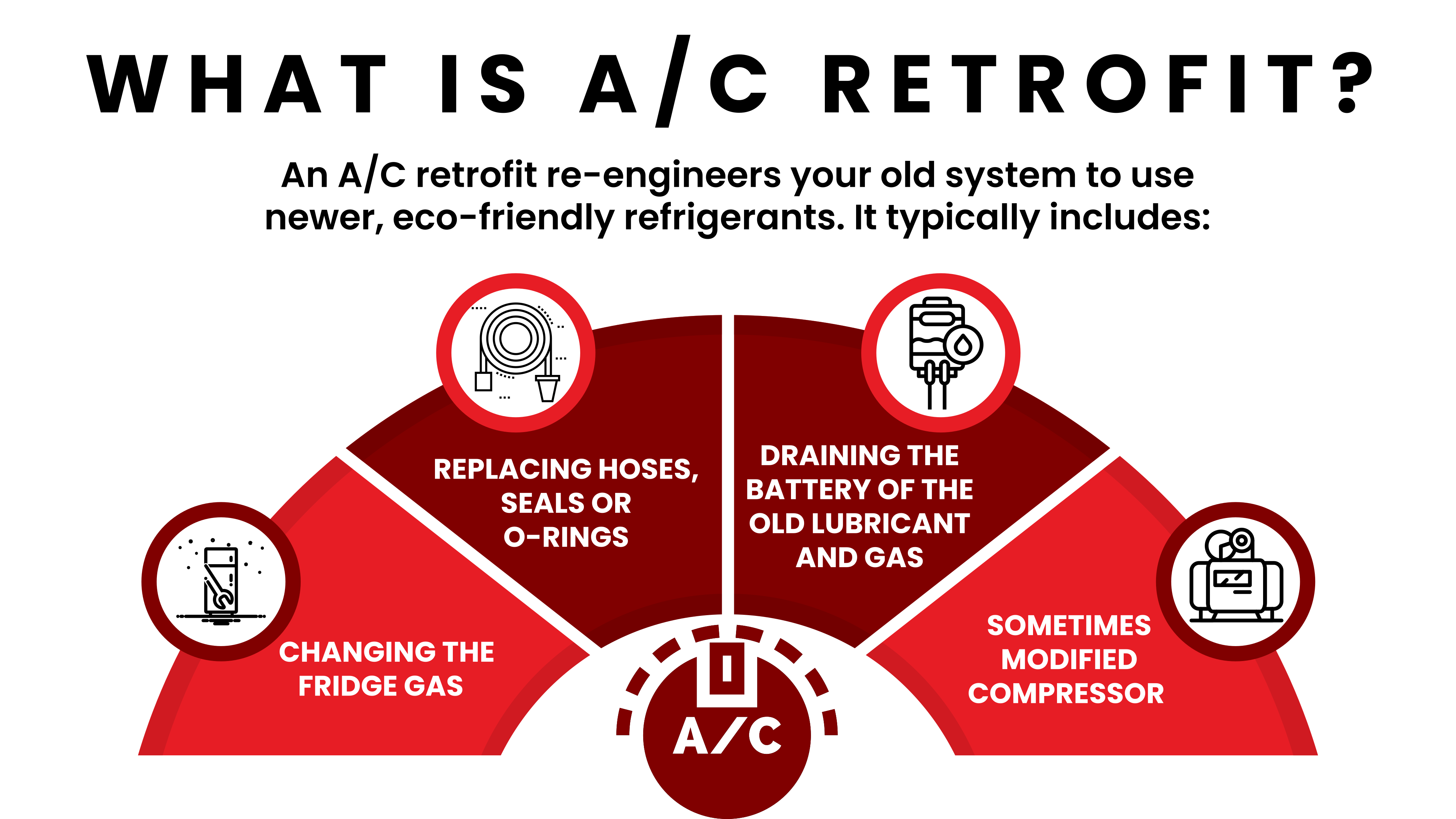
An A/C retrofit will comprise re-engineering your older air conditioning so that it can support newer and more inert refrigerants which are better for the environment. It normally entails:
- Changing the fridge gas
- Replacing hoses, seals or O-rings
- Draining the battery of the old lubricant and gas
- Sometimes modified compressor
Final Thoughts: Don t Sweat It No More! Fix It Now!
No one likes driving in a 90-degree temperature when they do not have an air ionizer system that can blow out air only. The good news is that most of the problems can be resolved and some of these problems you might not even need a mechanic.
It is possible to prevent summer meltdowns and expensive repairs, detecting the symptoms and diagnosing an already straightforward condition and responding to it promptly.
Wait is not until you are in a traffic jam sweating on the back of your back. This is a time to get your A/C checked, fixed and ready to help you beat the heat. If you want to have fool-proof services, don’t forget to book a service at Berks Auto Repair.
Frequently Asked Questions (FAQS)
Q1. What causes my car A/C to blow hot suddenly?
The reason may be low capacity of the refrigerant or bad compressor and electrical problems or clogged condenser. A hasty check or diagnostic examination can reveal the problem.
Q2. Is it possible to repair my car A/C?
There are repairs that DIYs can handle such as cabin filter replacement or recharging refrigerant (no leak). In case of the real potentially dangerous problems, such as failure of a compressor or electricity, one should call a professional.
Q3. What is the price of repairing a car A/C?
Service prices vary between $30 (self-patching filter), and $1000+ (system fix). Fixing the wrong thing can be avoided with a proper diagnosis to avoid wasting money.
Q4. Can you drive with a busted A/C?
Sure, though it becomes uncomfortable and can influence other systems in case of A/C issue related to the engine cooling system.
Q5. What are the signs in the car that will make me know that the car is low on refrigerant?
You can hear that the warm air blows, the compressor always runs, or you hear hissing. Low levels can be verified by use of an A/C pressure gauge.
Q6. Does hot air from the A/C imply a greater problem?
Sometimes, yes. It is an indication of a bad compressor or overheating of the engine. Do not postpone it so much.