 Towing
Insights
Contact
BOOK NOW
Towing
Insights
Contact
BOOK NOW

☰
×
The windshield on your car is not just a way to view the road clearly, but it helps to keep you safe, preserve the structural integrity of a car and enable the use of airbags. Thus, having observed the crack or a chip, you may think: “Do I need to fix it at least, or replace it all entirely?
It is not a just a superficial decision. When you are driving with a broken windshield, it is unsafe and, in most instances, it is against the law. The following guide will provide you the information on when repair is the way to go, when it will be needed to replace and how to make a smartest and safest choice on your car and savings.
Your car windshield is one of the most important safety elements. It:
These functions can be jeopardised even with minor damage. That is why it is important to realize the type and extent of a windshield damage.
Why Not Explore Diversity in The Car Culture? Read Our Article In a Hispanic Car Shop: Culture, Craft and Community
Prior to determining whether your windshield should be repaired or replaced completely, it is important to define what type of damage has been done. Just because a chip or crack exists, does not necessarily mean all chips and cracks are equal. The progress of each type of damage is different, has its own impacts on the visibility and safety, and affects the course of decision-making. To get a better understanding of windshield damages, here is a detailed breakdown of the most popular types of damages:
Chips are tiny patches of damage wherein a fragment of the windshield was chipped off, usually as a result of flying debris when a gravel, a rock or salt is flung into the road during the drive.
Less than 1 inch in diameter, usually.
Yes, most broken small chips can be fixed, with early attention.
Check repair of chips in a few days after noticing it, particularly chips near the edge or on a high stress region of the glass.
A crack is a line of separation, in the glass, starting at a chip or edge. It can come in all of a sudden or take the form of pressure or temperature or impact inflicted.
It is only when it is less than 6 inches and not visible to the driver or at the edge. Cracks that are larger or spreading tend to need replacements altogether.
Cracks become bigger with time. May break with sudden clash Weakens the shape of the windshield.
Inspect immediately. Small cracks can be fixed; those that are longer need a replacement.
A bullseye is a sort of chip whose damage area is circular and dark within the centre also appears like a dart board or bullseye. It is normally occasioned by a dull object like a small rock or debris on the road.
Normally 0.5 to 1-inch diameter.
Circular and concentric circles
May be a limited spider-webbing
Yes, bullseyes are normally quite simple to fix, provided that you address them right away.
Water and trash may also enter the glass and weaken it.
Can result in cracking outwardly
Fix ASAP and prevent any additional damages or sight problems.
Such damages involve a combination of various types (in most cases, there is a chip with the cracks extending). Like a bullseye that is scratched, or a star break and extra surface chip.
In rare cases-it depends on extent, spread, and depth of the damage. Combination that is bigger or deeper normally requires replacement.
Let an expert evaluate. Small breaks in combos may occasionally be salvaged through resin; larger ones usually have to be replaced.
A star break appears to be similar to a tiny crater and has cracks (or rays) coming out. It arises due to a sharp hit where a sharp pebble is thrown against the glass at high velocity.
Major impact area with several tiny cracks which fan out like a star Irregular, having 4 to 8 crack legs
Yes, in case they are not too large in diameter (under 3 inches) and not too late taken.
It is easier to fix promptly so that the crack legs do not start getting longer and branching.
Some Lesser Common Types to Be Aware of
Half Moon
· Like a bullseye except an incomplete circle
· Less difficult to fix and spread less common
Surface Pit
· Slight, surface abrasiveness of sand or small dinner debris
· It is not a deep one, rather a matter of cosmetics
Long Crack
· Fractures that are more than 6 inches
· Normally begins on a fringe
· Almost always demands replacement
So let us break it down:
Features | Repair | Replacement |
Time | 30 mins to 1 hour | 1 to 2 hours |
Price | $50-$150 | $200-$500 and more |
Insurance Coverage | Frequently 100 % | Possibly must have deductible |
Damage Size | Chips less than or equal to 1 inch, cracks less than or equal to 6 inches | Anything bigger or at dangerous areas |
Effectiveness | Avoids spreading, enhances the visibility | Regains complete safety and clarity |
Environment Impact | Minimal (no glass wastes) | High (glass disposals were present) |
Not all the cracks and chips imply the replacement of the windshield causing some heavy expenses. Often a simple, fast fix will do the job to make something safe again and halt further deterioration. Repairing has the advantages of being both cheaper and quicker as well as environmentally sound in comparison with replacing items.
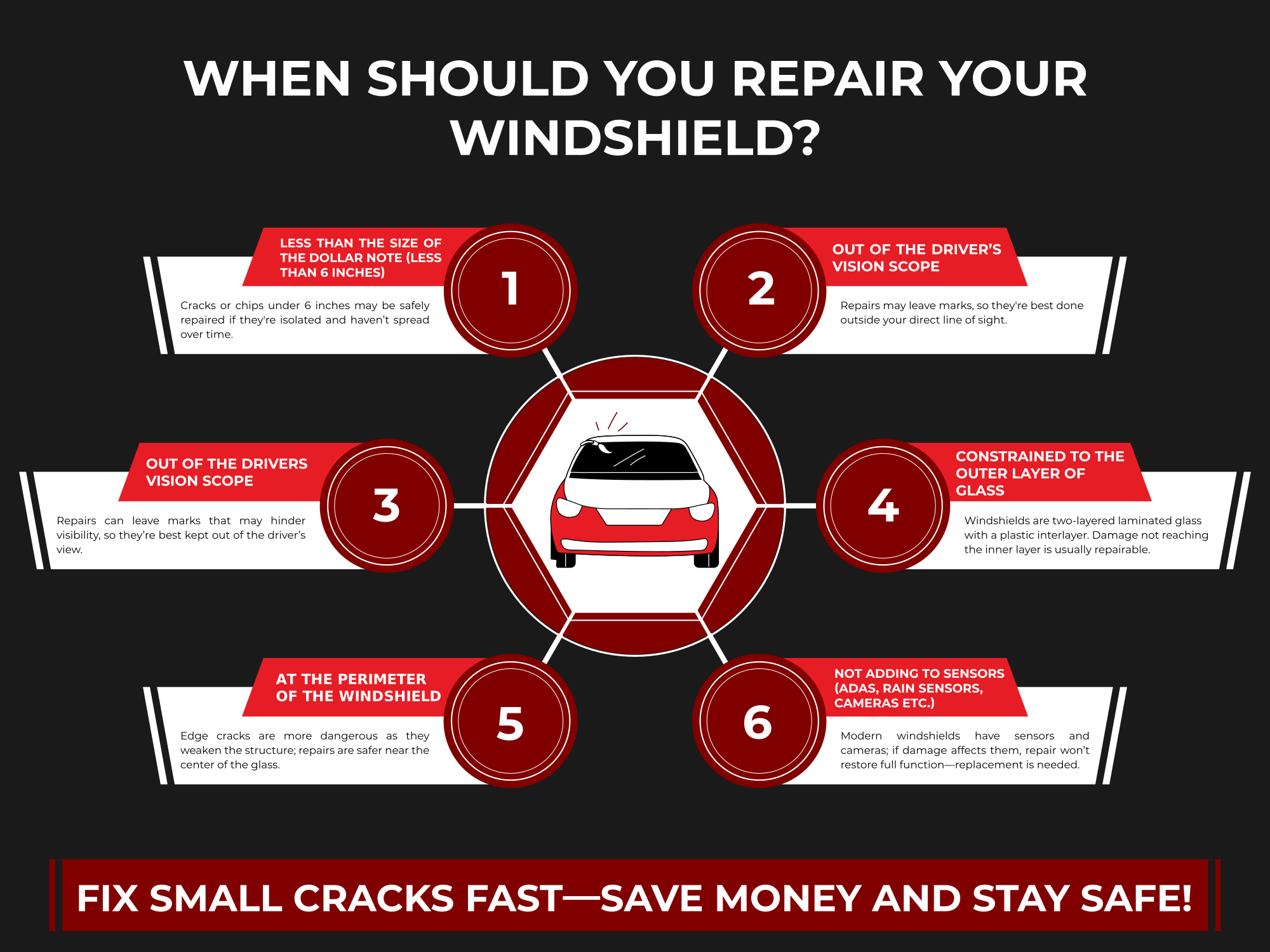
The cracks or chips that are less than 6 inches long in length may be safe to fix back but only when they are isolated and have not extended with time.
The repairs are associated with minor marks and in case they are directly before your eyes, they may disrupt safe driving. That is why repair may be proposed out of the viewing area only.
The repairs are associated with minor marks and in case they are directly before your eyes, they may disrupt safe driving. That is why repair may be proposed out of the viewing area only.
The windshields are two layered laminated glass with an interlayer made of plastic. When the damage does not extend into the inner layer, then usually it is fixable.
Edge cracks are even more hazardous since they weaken the structure. A more common location to repair would be at the middle or nearly in the middle glass damage.
Windshields nowadays are even technologically advanced. When damage would impede any sensor/camera view then repair would not restore full functionality whereby a replacement would be required.
A repair is far cheaper than a complete substitute and it only takes less than an hour.
Repair minimises waste and does not introduce a big, laminated piece of glass to the landfill.
Exactly at the time of manufacture, your original windshield is sealed. Repair maintains this OEM (original equipment manufacturer) seal that is difficult to reproduce the same when it is being replaced.
The broadest insurance plans include chip and crack repair with no deductible and no hike in premiums.
Although repairs are needed to take care of minor damages made on the windshield, there are instances where windshield damage is already too enormous or risky to repair. These events not only call for replacement, but it is also needed to bring the car to its original safety capabilities.
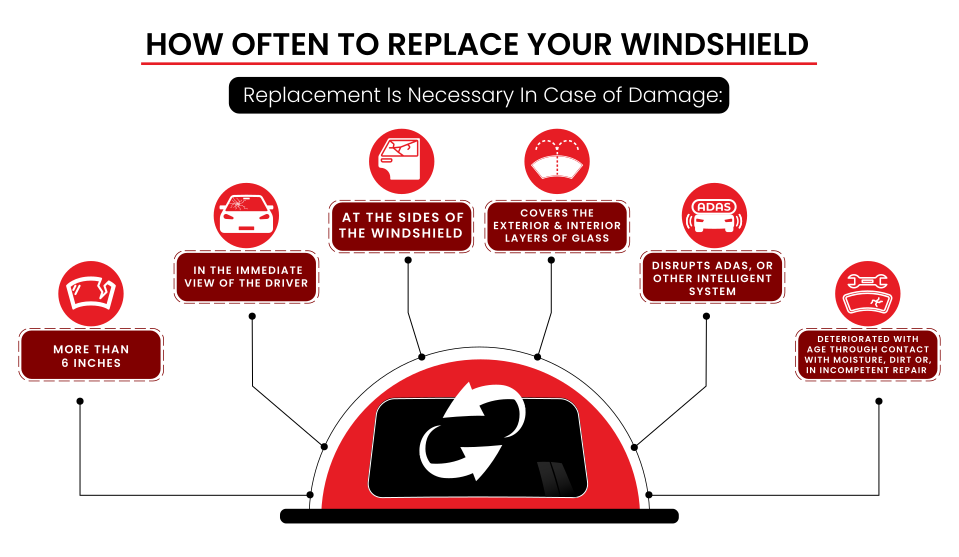
Prolonged cracks weaken structural integrity and once stressed; they tend to propagate in an uncertain way that makes repair unreliable.
A professional repair can produce distortions even if done carefully. When the harm is staring you directly in the face, it can pose a problem when trying to drive safely.
Edge cracks may weaken the frame of the windshield or cause the windshield to shatter or pop during an accident.
The damages that extend deep through the laminated glass cannot be repaired and are very dangerous to the passengers.
A crystal clear and well calibrated windshield is needed in such features as lane departure warning systems, automatic emergency braking, rain sensors and heads-up displays.
Slow repair results in the enlargement of the crack and diffusion of pollution inside of it, decreasing the probability of having a clean repair.
The windshield provides 60 or more percent of roof strength during a rollover. A bad windshield cannot give you the same protection.
By replacing the glass, it is possible to exclude the chances of the crack or playing up under heat or pressure.
Forward flying sensors and cameras of many vehicles depend on the windshield today. These systems can fail without the process of replacement and calibration.
The repaired cracks are safe but may cause some slight blemish on the appearance. A clear un-impaired view is seen through a new windshield.
They tend to branch in several ways and cannot be sealed appropriately using resin.
Reflects that moisture or dirt has gotten through, lowering the performance of a repair.
Indicates the crack is increasing because of internal stress or pressure change- it should be replaced immediately.
Your windshield is more than a piece of glass; it protects you between the open road and yourself. Making an actual decision on whether to repair or replace depends on the size, location and extent of damage. When it is a minor thing, and out of the way, get that mended as soon as possible. Replace it immediately when it is long, growing or by an edge.
In times of doubt always go to a professional service like Berks Auto Repair. It pays to keep you safe and to afford a perfect perspective towards the future.
Yes, but as long as it is not in your eyesight and not spreading. Nevertheless, one ought to have it checked right away.
No. The scar will be minimal, and the damage will be stabilized, but the clarity will increase a lot.
The majority of the fixes take 30-60 minutes.
At least leave 24 hours before washing it in order to allow the adhesive cure.
A sustainable alternative is to avoid driving and book an ASAP repair or replacement.