 Towing
Insights
Contact
BOOK NOW
Towing
Insights
Contact
BOOK NOW

☰
×
Learning to drive a car needs practice, whether you are learning how to drive or converting to an automatic, it is important to learn the functionality of an automatic transmission in order to drive safely and with confidence. This detailed guide is going to take you step-by-step through everything that a beginner should know about working of an automatic transmission, including terminologies, general awareness and driving pointers, issues with regard to maintenance and so on.
Automatic transmission is a gear system that changes gears automatically which means that the driver does not have to use a clutch system or manually shift gears. It makes driving less complicated, particularly at stop-and-go vehicle traffic patterns, which makes it an excellent mode of transport when learning how to drive.
In manual automobiles, the drivers are expected to operate the gear stick by pushing the clutch and shifting gears with hands. In contrast, automatic vehicles use their hydraulic system, sensors and a torque converter to select gears as they require them depending on the speed and load and upon driving conditions.
The automatic transmissions use an intricate mechanism of parts to change gears without any manual operation of the driver. The simplest way to explain this is:
Once you accelerate, the computer system in your car will determine the time it will shift gears up or down by using the real-time data to receive power effectively, and without making you work hard in the process.
Read Our Article for Some More Pro Tips: Why Missing Out on These 5 Simple Services Can Shorten the Life of Your Car by Half
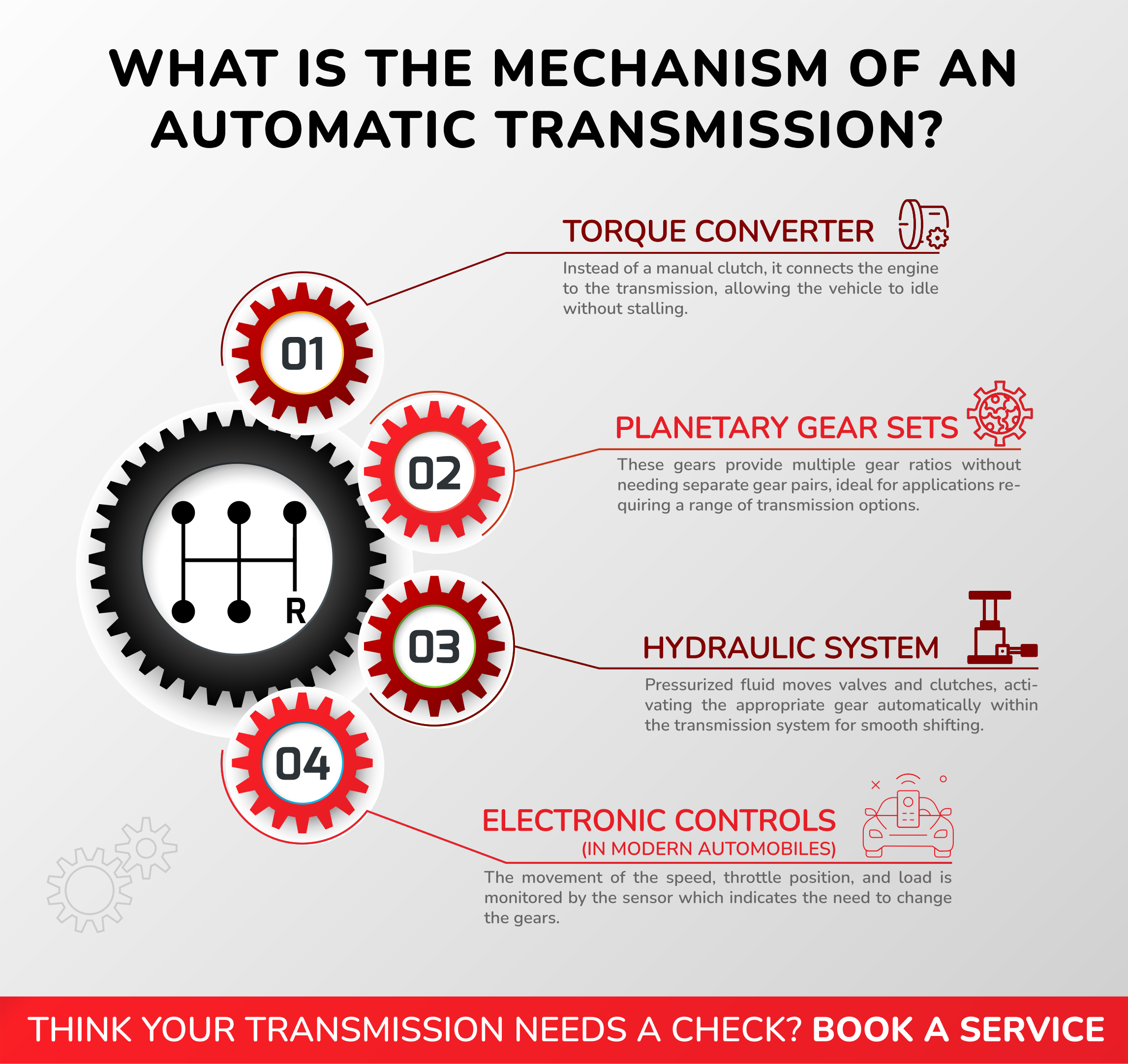
The following are some of the essential elements:
Being familiar with these components, drivers understand how these malfunctioning or replenishing can influence the performance.
Automatic gear shifters fall into the following categories:
Even some newer cars have an S key (Sport) and +/- manual mode, so the driver has variation over the shift without a clutch.
Below is a guide to driving an automatic transmission vehicle to first-time users:
When shifting always use the brake pedal between P, R, N and D.
Advantages | Disadvantages |
No clutching and gear shifting required. | It is more expensive and costly to purchase and maintain. |
Reduces driver fatigue particularly during traffic. | Reduced fuel economy; however, it has been addressed by improved modern CVTs and dual-clutch systems. |
Enhances smooth gear shifts and increases the level of comfort in driving. | Poor control particularly, in rough-road or speed road driving. |
Easy to learn and is suitable to first-time drivers. | |
More accessibility, as the automatic systems are now featured more in vehicles. |
Driving is a significant step to take and being aware of the transmission of your vehicle is a significant process of it. Automatic cars have a much easier learning curve, yet knowledge, awareness and routine maintenance are still necessary to drive in a reasonable way.
As a novice, you should not simply leave the work of your car to it and believe that it can do everything; you should also understand how it works and how to take care of it, and in case something seems off. Automatic does not mean no hands on the wheel; it only implies that you will have more time on the road than changing gears.
When people start to understand automatic transmissions, it is necessary to break some old or misinformed myths. The most widely spread myths should be dealt with and clarified:
Myths | Reality |
Only a lazy driver should have automatics. | There was a time when manual transmission was a common feature and was considered a choice of a driver. Automatics are more convenient and safer now than in the past and most of the time in traffic, security besides being simple to drive. Automatics are not lazy but smart driving, making city driving easier especially in traffic-prone urban areas. |
Consume high fuel energy | his was the case in old models. Nonetheless, in contemporary automatics (particularly CVTs (Continuously Variable Transmissions) and dual-clutches), fuel economy is the maxim. Smart gear ratios and electronic control of engine performance in many cases now has automatics beating or at least comparing to manuals in miles per gallons (MPG). |
The car is impossible to control | All contemporary automatics have manual override or paddle shifter or sport mode, now that drivers have more control, when they want it, such as overtaking, downhill, or towing. The AI-based transmission mapping allows automatics to fit the road better, sometimes even better, than many manuals. |
Maintenance-free | Automatic transmissions demand regular fluid monitoring, replacing filters and servicing. Failure to follow them can cause overheating, wear on the inside and expensive repairs. The best way to ensure complete failure of transmission is to skip transmission maintenance. |
Automatic cars are less speedy | Automatic and dual-clutch transmission change gears quicker than a human can use a manual in high-performance cars. This not only simplifies the usage of automatic sports cars but also by times faster on a track. |
The expenses are always higher in repair. | Most of the major problems with automatic transmission can be avoided with proper care; although, some of the repair procedures may be expensive. And there is even reduced need to repair, given that there is more usage of quality sealed units in newer models. |
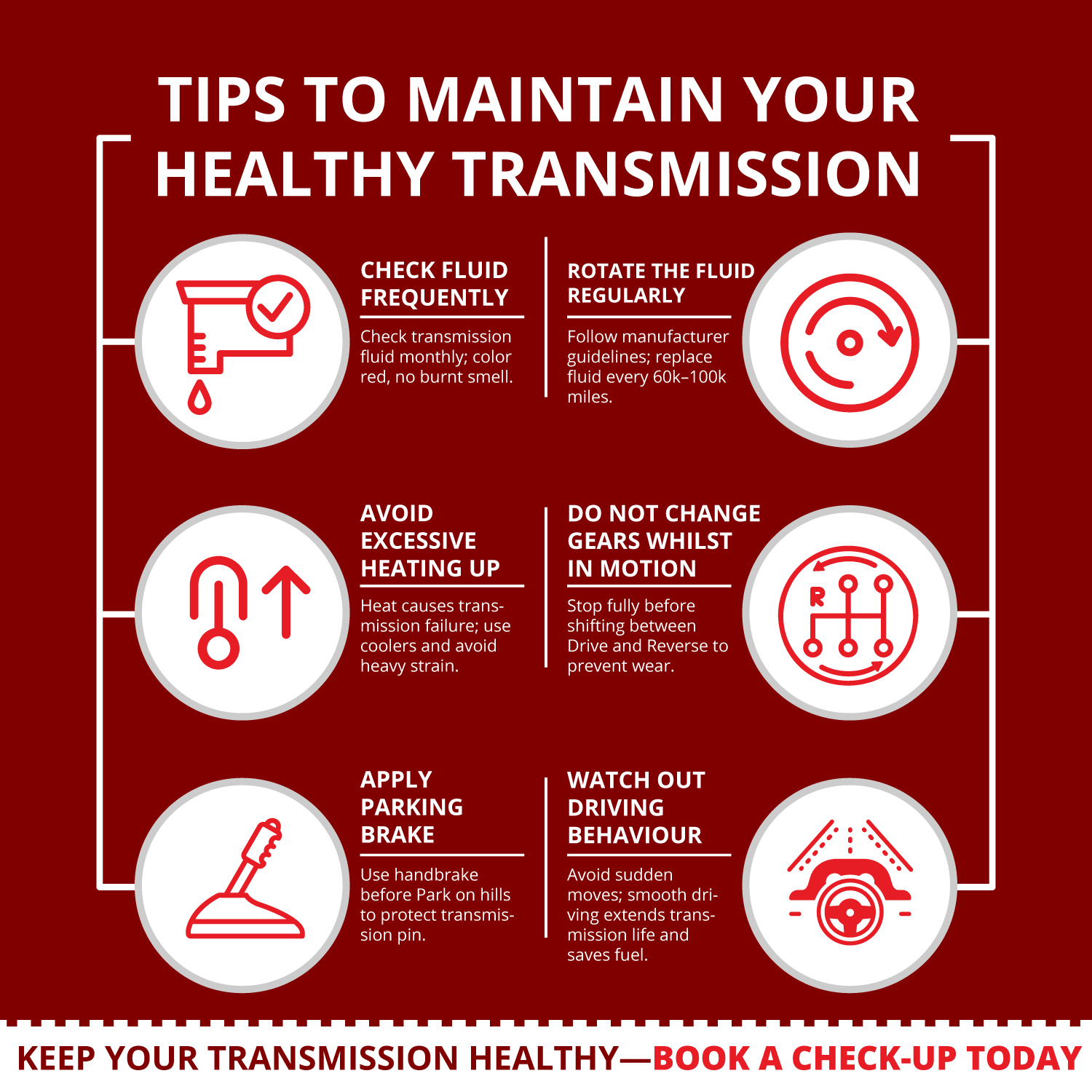
A regularly serviced automatic transmission will make your vehicle last longer and incur less repair costs as well as smooth operation of your vehicle. Refer to these supplemented tips:
Get in the practice of checking fluids once a month. Apply a clean dipstick (whereupon obtainable) and make sure that the liquid is red (not dark brown) and must not have a burnt smell. When it comes to having a dipstick in your car, well not all of them have one, in this case, you may consult your mechanic and request him/her to check that when they work on the car at the service point.
Go by the recommendation of your manufacturer, usually in 30,000 to 60,000 miles. Some fixed transmissions say that they are lifetime fluids, but it is always a good idea to get it replaced at around every 100,000 miles or so, particularly under severe driving conditions.
Transmission failure is the first cause by heat. Warming up can be caused by towing heavy loads, prolonged uphill, or/and driving in hot climate. Employ auxiliary transmission coolers, as required and limit stop-and-go travel.
Bring the vehicle to a halt every time before switching between D (Drive) and R (Reverse). Cross shifting during vehicle operation exerts excessive stress on internal transmission elements such as the clutch packs and might cause premature transmission wear.
When going to park particularly on hills, apply handbrake and then move into P (Park). This decreases the loads on the parking pawl-a tiny pin inside the transmission that keeps your car where it is.
Do not make sudden acceleration or braking. Transitions should be smooth because that is important in the life span of transmission. Dragging your foot in driving not only punishes your fuel, but it also causes additional internal stress to your transmission.
Hit the Road!
After reading this you know the fundamentals of automatic transmission hence you can drive happily now. Keep in mind: it is the car which works with the gears, and you control the rest. Practice, be safe, and maintain your car in tip top shape, and driving will just be natural to you.
If you need more help with your automatic car then feel free to visit Berks Auto Repair for an expert advice.
In case of novice drivers, it true, as there is no clutch or shifting. Ultimately, which makes it easier to operate.
Earlier automatics did but newer cars have fuel efficient systems that now compare or even exceed manuals in terms of performance.
Yes. In case you are trained on manual, and you possess a full license, you can drive both. Nevertheless, licenses issued on automatically only cars might not allow driving manuals.
On average, every 30,000 to 60,000 miles or so but be sure and check your manual.
Park on a safe location, inspect the liquid and call a mechanic. It has dire consequences to drive with a slipping transmission.
No. You should always come to a full stop before touching Park or Reverse. Failure to do this may cause serious harm to your transmission.
Yes, but only as required i.e., hilly terrains, towing and engine braking.